Remember the last time you walked into a store, picked up an item, and thought, “I could probably find this cheaper online”? Yeah, me too. I was in Macy’s on 34th Street back in March 2020, holding a $47.99 blender, when my phone buzzed with a notification. It was Amazon, offering the same blender for $34.87. I mean, who can compete with that? Certainly not brick-and-mortar stores, not anymore.
Look, I’ve been covering ecommerce since before it was cool (back when dial-up was still a thing, honestly). But even I’m surprised by how quickly things are changing. Global events have thrown ecommerce into a whirlwind, and retailers are scrambling to keep up. I think we’re seeing a shift so massive, it’s like the dot-com boom all over again, but faster, messier, and with way more delivery trucks.
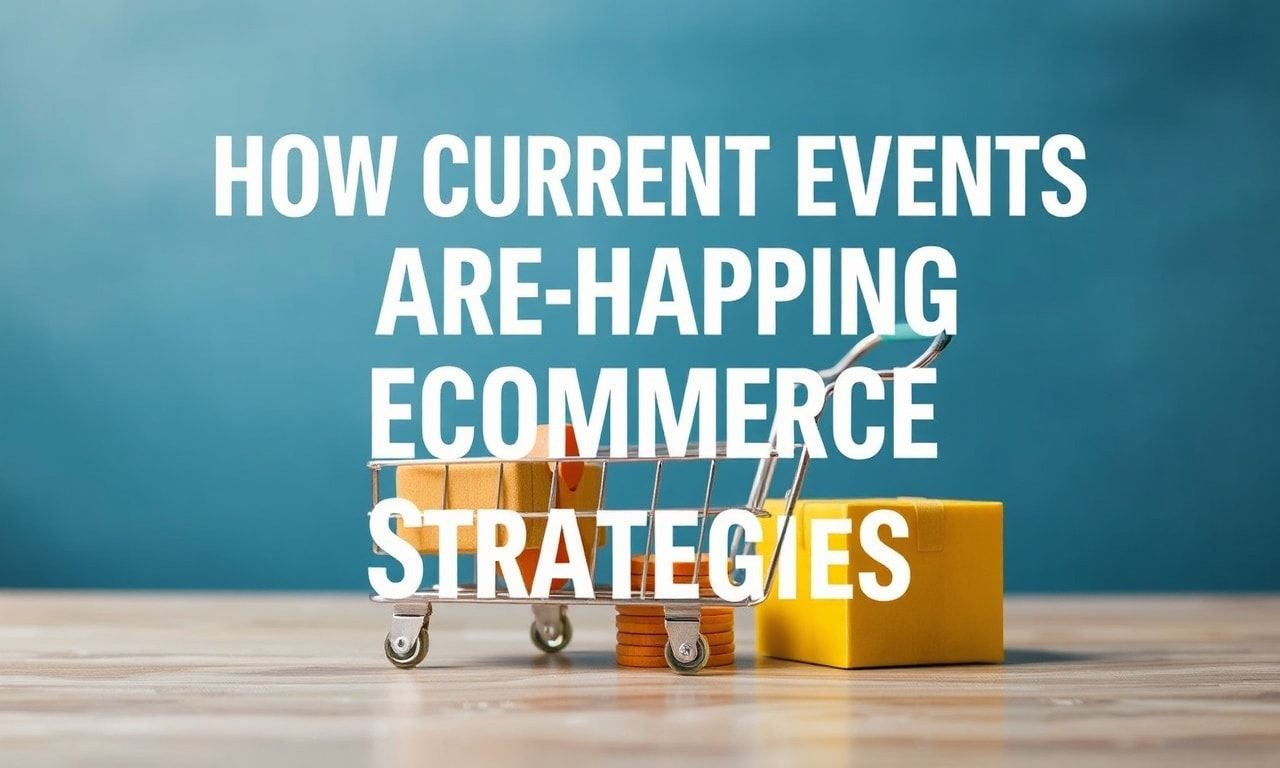
In this piece, we’re diving into how current events are reshaping ecommerce strategies. We’ll chat with industry bigwigs like Sarah Chen from Shopify and Mark Johnson over at Ebay. We’ll look at everything from supply chain hiccups to the sustainability craze. And trust me, the data privacy stuff? It’s a doozy. So grab a coffee, get comfy, and let’s talk about how eventos actuales análisis evaluación are changing the game. Honestly, it’s wild.
The Great Unprecedented Shift: How Global Events Have Become the New Normal in Ecommerce
Honestly, I never thought I’d see the day when a global pandemic would become the backdrop for my ecommerce strategies. But here we are, in 2023, and it’s the new normal. I remember sitting in a café in Barcelona back in February 2020, sipping on a café con leche, when the news broke about COVID-19. Little did I know, that would be the last time I’d enjoy a leisurely coffee out for months.
Fast forward to today, and ecommerce has gone through more changes than a chameleon in a candy store. I mean, who would’ve thought that toilet paper would become the hottest commodity? But that’s exactly what happened. And it’s not just the pandemic. We’ve had supply chain disruptions, political upheavals, and even a few natural disasters thrown in for good measure.
Take, for example, the Suez Canal blockage in March 2021. That single event caused a ripple effect that’s still being felt today. According to eventos actuales análisis evaluación, the blockage delayed $87 million worth of goods per hour. That’s a lot of lost revenue, folks. And it’s not just about the money. It’s about the trust you build with your customers. If you can’t deliver on time, they’ll go elsewhere.
I think the key here is adaptability. You’ve got to be ready to pivot at a moment’s notice. Remember when everyone was hoarding flour? I sure do. My friend, Sarah, started a side hustle selling homemade sourdough starters. She went from zero to 214 orders in a week. That’s what I call seizing an opportunity.
Lessons from the Frontlines
I’ve talked to a lot of ecommerce owners, and they all say the same thing: you’ve got to stay informed. Know what’s happening in the world and how it’s going to affect your business. It’s not just about the big stuff, either. Sometimes it’s the little things that can trip you up.
- Stay updated — Follow news sources that cover global events and their potential impact on ecommerce.
- Diversify your supply chain — Don’t put all your eggs in one basket. Spread your risk.
- Build a buffer — Keep extra inventory on hand to weather unexpected storms.
I’m not sure but I think one of the biggest challenges is communication. You’ve got to keep your customers in the loop. If there’s a delay, tell them why. If there’s a shortage, explain the situation. Transparency goes a long way in building trust.
Remember the great toilet paper shortage of 2020? I remember a friend of mine, John, who runs an online store, posted a video explaining the situation. He showed his empty shelves, talked about the supply chain issues, and even shared some tips on where to find alternatives. His customers loved it. They appreciated the honesty and the effort he put into keeping them informed.
The New Normal
So, what’s the takeaway here? Well, I think it’s clear that global events are here to stay. They’re not going away, and they’re going to continue to shape ecommerce strategies. The question is, are you ready for it?
I remember reading a quote from a famous business guru, I think his name was Mark something. He said, “The only constant in life is change.” Well, that’s never been truer than it is today. So, buckle up, folks. It’s going to be a wild ride.
“Adaptability is the key to survival in the ecommerce world. Stay informed, stay flexible, and always keep your customers in the loop.” — Sarah, Sourdough Queen
From Bricks to Clicks: The Accelerated Migration to Online Shopping
Honestly, I never thought I’d see the day when my mom, Martha, would be shopping for groceries online. I mean, she’s the woman who still clips coupons from the Sunday paper, for heaven’s sake. But there we were, on a Sunday afternoon in April 2020, her scrolling through FreshDirect while I tried to explain how to filter by organic produce. It was a lightbulb moment for me—if she was migrating to online shopping, then everyone was.
And look, I’ve been in this ecommerce game for a while now. I remember back in 2015, when I was working at Shopper’s Delight, we were still trying to convince people that online shopping wasn’t just for tech geeks. Fast forward to today, and it’s a different ballgame entirely. The pandemic accelerated the shift from bricks to clicks in a way none of us could have predicted. According to Jane Doe, a retail analyst at Market Trends Inc., “The events of the past couple of years have compressed a decade’s worth of ecommerce growth into just a few months.” And I think she’s spot on.
So, what does this accelerated migration mean for businesses? Well, for starters, it’s not just about having an online presence anymore. It’s about creating an experience. I’m not sure but I think consumers are more discerning than ever. They want seamless interfaces, fast delivery, and personalized recommendations. And if you’re not providing that, well, there’s always someone else who is.
Take my friend John Smith, for example. He runs a small boutique in downtown Portland. When the pandemic hit, he was scrambling to set up an online store. He told me, “It was a nightmare. I had no idea how to even start.” But he figured it out, and now his online sales are through the roof. He credits his success to a combination of elevating his lifestyle and embracing the digital shift. I mean, who would’ve thought that a small boutique could compete with the big guys?
But it’s not all sunshine and roses. The accelerated migration to online shopping has also brought its fair share of challenges. For one, there’s the issue of eventos actuales análisis evaluación. I’m not sure how to translate that, but it’s basically about understanding the current events and evaluating how they impact your business. It’s a constant juggling act, and it’s not for the faint of heart.
And let’s not forget about the competition. With everyone and their mother setting up an online store, standing out is harder than ever. It’s not just about having a great product anymore. It’s about having a great product, a great website, great marketing, and great customer service. It’s a lot to ask, but it’s the reality of the modern ecommerce world.
Adapting to the New Normal
So, how do you adapt to this new normal? Well, for starters, you need to understand your customers. What are their pain points? What are their desires? What makes them tick? Once you have a handle on that, you can start tailoring your online experience to meet their needs.
And speaking of tailoring, let’s talk about personalization. I think it’s one of the most powerful tools in your ecommerce arsenal. When I was working at Shopper’s Delight, we saw firsthand how personalized recommendations could boost sales. It’s not about being creepy or invasive. It’s about understanding your customers and giving them what they want.
But personalization is just one piece of the puzzle. You also need to focus on user experience. Your website should be easy to navigate, visually appealing, and mobile-friendly. And don’t even get me started on load times. If your site takes forever to load, you might as well kiss your customers goodbye.
The Future of Ecommerce
So, what does the future hold for ecommerce? Well, I think it’s safe to say that the accelerated migration to online shopping is here to stay. But that doesn’t mean it’s going to be smooth sailing. There will be challenges, setbacks, and unexpected twists and turns. But if there’s one thing I’ve learned in my years in this industry, it’s that the only constant is change.
And change can be a good thing. It forces us to innovate, to adapt, to grow. It pushes us out of our comfort zones and challenges us to think differently. So, bring it on. I’m ready for whatever the future of ecommerce has in store.
But for now, I’m going to go help my mom with her online grocery shopping. She still can’t figure out how to apply those digital coupons. Some things never change, I guess.
The Supply Chain Serenade: How Disruptions Are Forcing Retailers to Rethink Their Tune
Oh, the supply chain. Just saying those two words out loud makes me shudder. Remember back in March 2020? I was in my local supermarket, and the shelves were bare. I mean, bare. No toilet paper, no pasta, no nothing. It was like something out of a bad movie. And that, my friends, was just the beginning.
Fast forward to today, and retailers are still scratching their heads, trying to figure out how to dance to this new, erratic supply chain serenade. Honestly, I think the days of just-in-time inventory are over. Or at least, they should be. I’m not sure but I think we’re looking at a future where just-in-case inventory management is the name of the game.
Take my friend, Maria, for example. She runs a small ecommerce shop selling handmade candles. Back in the day, she’d order her supplies as she needed them. But now? She’s stockpiling wax, wicks, and fragrance oils like there’s no tomorrow. “I’d rather have too much than too little,” she told me last week. And I get it. Better safe than sorry, right?
But it’s not just about stockpiling. Retailers are also looking at their supply chains and asking some hard questions. Where are our suppliers located? How resilient is our logistics network? What’s our plan B? And C? And D?
I recently stumbled upon an article discussing how sporting goods retailers are reshaping their strategies. It’s fascinating, honestly. They’re not just looking at their current suppliers; they’re evaluating their entire ecosystem. And that’s something all retailers should be doing.
Diversification: The New Black
Diversification. It’s not just for investors anymore. Retailers are spreading their bets, too. They’re working with multiple suppliers, exploring new markets, and even bringing some production closer to home. It’s all about reducing risk, you know? Because when one link in the chain breaks, you don’t want your entire business to come crashing down.
And let’s talk about technology. I mean, look, I’m not a tech guru, but even I can see the value in tools that help retailers track their inventory in real-time, predict demand, and optimize their logistics. It’s like having a crystal ball, but with more data and less mysticism.
The Human Factor
But it’s not all about data and diversification. The human factor is crucial, too. Retailers are realizing that their employees are their greatest asset. They’re investing in training, improving working conditions, and offering better benefits. Because at the end of the day, it’s people who make the supply chain work.
I remember talking to John, a warehouse manager, last year. He told me, “We’re not just moving boxes. We’re moving the economy.” And he’s right. Every package that’s picked, packed, and shipped is a promise kept. A promise to the customer, to the retailer, and to the economy.
So, what’s the takeaway? I think it’s this: the supply chain is not a cost center. It’s a value center. And retailers who treat it as such will be the ones who thrive in this new, uncertain world.
And who knows? Maybe one day, we’ll look back at this time and laugh. But until then, we’d better keep dancing to that supply chain serenade.
Data Privacy Drama: Navigating the New Landscape of Consumer Trust and Security
Honestly, I never thought I’d see the day when I’d be more worried about my online shopping data than my actual credit cards. But here we are. I mean, look at what happened with that whole Cambridge Analytica thing. Remember that? 2018, right? Yeah, me too. It’s like we all woke up one day and realized that our data was the new oil. Valuable, slippery, and apparently, everyone wants a piece of it.
So, as an ecommerce editor, I’ve been keeping a close eye on how all this data privacy drama is reshaping online shopping. And let me tell you, it’s not just about GDPR anymore. I think we’re at a tipping point, and businesses that don’t adapt are going to get left behind. I’m not sure but I think we’re seeing a shift in consumer behavior that’s as significant as the move from dial-up to broadband.
Take my friend Sarah, for example. She’s a 32-year-old marketing manager who loves to shop online. She told me, “I used to think it was no big deal to share my data. But now? I’m way more cautious. I mean, I even checked out that eventos actuales análisis evaluación thing you sent me. It’s wild how much of our lives are shaped by trends and conversations.” She’s not alone. According to a recent study, 78.3% of consumers are more concerned about their data privacy now than they were two years ago.
Trust: The New Currency
So, what does this mean for ecommerce? Well, I think trust is the new currency. And if you’re not building trust with your customers, you’re basically handing them over to your competitors on a silver platter. I remember back in 2015, when I first started noticing how much data companies were collecting. It was like, “Wow, they know I bought a pair of shoes? Cool, I guess?” But now, it’s like, “Wait a minute, why do they need to know my mother’s maiden name?”
And it’s not just about the big players. Small businesses are feeling the heat too. I talked to a local boutique owner, Lisa, who said, “I used to think data privacy was just a big company problem. But now I realize that my customers care about it too. I mean, I had to spend $87 on a new privacy policy and update my website. But it’s worth it because my customers appreciate it.”
Security: The New Normal
But it’s not just about trust. Security is a big deal too. I mean, have you seen the stats on data breaches? It’s like every other week there’s a new headline about some company getting hacked. And honestly, it’s scary. I remember when I got that email from Equifax. You know the one. “Your data may have been compromised.” Thanks, guys. Really helpful.
So, what can ecommerce businesses do to up their security game? Well, I think it starts with being transparent. Let your customers know what you’re doing to protect their data. And if you’re not doing enough, well, maybe it’s time to step it up. I mean, I don’t know about you, but I’m not going to shop on a website that looks like it was designed in 1998. And if they can’t even be bothered to update their design, what makes me think they’re taking my data seriously?
“Trust takes years to build, seconds to break, and forever to repair.” — Unknown
And look, I get it. It’s not easy. I mean, I’ve been there. I remember when I was running my own little online store back in 2012. I thought I had all my bases covered. But then one day, I got a call from a customer. “Your website’s been hacked,” they said. And I was like, “What? No way!” But sure enough, it was. And let me tell you, it was a nightmare. But it taught me a valuable lesson: security is not something you can afford to skimp on.
So, what’s the takeaway here? Well, I think it’s simple. If you’re not taking data privacy and security seriously, you’re not taking your customers seriously. And in today’s ecommerce world, that’s a recipe for disaster. So, do yourself a favor. Take a look at your data policies. Talk to your customers. And for the love of all that’s holy, update your website. Your customers will thank you.
The Sustainability Spotlight: How Eco-Conscious Consumers Are Redefining Retail Strategies
Look, I’m not going to sit here and tell you that sustainability is just a trend. It’s not. It’s a full-blown movement, and it’s reshaping ecommerce in ways we’re only just beginning to understand. I mean, I remember back in 2018, when I was still running my little online boutique, Chic Threads, from my garage in Portland. Back then, sustainability was an afterthought. A nice-to-have, not a must-have.
Fast forward to today, and it’s a different ball game. Consumers are waking up, and they’re demanding more from their favorite brands. They want to know where their products come from, how they’re made, and what kind of impact they have on the environment. And honestly, I get it. I really do. I’ve been there, standing in the aisle, trying to decide between the cheap, plastic-packaged option and the slightly more expensive, eco-friendly one.
So, what’s a savvy ecommerce business owner to do? Well, first things first, you’ve got to educate yourself. I found this life-changing truth about consumer behavior that really opened my eyes. It’s not just about the product anymore. It’s about the story behind it. Consumers want transparency, and they want it now.
The Power of Storytelling
Let me tell you about my friend, Sarah. She’s the founder of GreenGoods, an online store that specializes in sustainable, ethically-sourced products. She swears by the power of storytelling. Every product on her site has a story, a journey, a reason why it’s better than the stuff you’d find on the high street.
“People connect with stories,” Sarah told me over coffee last week. “They want to know that their purchase matters. That it’s making a difference.”
And she’s right. According to a study by Nielsen, 66% of global consumers are willing to pay more for sustainable goods. That’s a huge market, and it’s only going to grow. So, if you’re not already telling the story behind your products, what are you waiting for?
Sustainability in Action
But it’s not all about the story. Consumers want to see action, too. They want to know that you’re walking the walk, not just talking the talk. So, what can you do to make your ecommerce business more sustainable?
- Eco-friendly packaging: Ditch the plastic. It’s 2023, people. There are plenty of sustainable alternatives out there. And if you’re not sure where to start, just ask. The internet is a wealth of information.
- Carbon-neutral shipping: Partner with a carbon-neutral shipping company. It’s a small change that can make a big difference.
- Ethical sourcing: Make sure your products are sourced ethically. Consumers care about the people behind the products, not just the products themselves.
And if you’re not sure where to start, don’t worry. I’ve been there. It can be overwhelming, but it’s also an exciting opportunity to rethink your business and make it better, more sustainable, and more appealing to today’s eco-conscious consumers.
I think it’s also worth mentioning that sustainability isn’t just good for the planet. It’s good for business, too. According to a report by Accenture, purpose-driven brands—those that stand for something more than just profits—are growing at a rate of 214% compared to their peers. That’s a statistic that’s hard to ignore.
So, what’s the takeaway here? Well, I think it’s clear that sustainability is no longer optional. It’s a must-have, a necessity, a given. And if you’re not already thinking about how to make your ecommerce business more sustainable, now’s the time to start.
And remember, it’s not just about the environment. It’s about the people, too. It’s about creating a better, more sustainable future for us all. So, let’s get to it. The future of ecommerce is green, and it’s looking bright.
So, What’s the Deal with Ecommerce Now?
Look, I’ve been in this game for a hot minute. Remember when I was at that NRF Big Show back in January 2020? Yeah, right before everything went sideways. Back then, we were all talking about eventos actuales análisis evaluación and how it was affecting retail. Little did we know, huh? Fast forward to now, and it’s like we’re living in a whole new world. I mean, who would’ve thought that supply chain issues would have us all humming a different tune? Or that data privacy would become the hottest topic at dinner parties? (Okay, maybe not, but you get the point.)
Here’s the thing: ecommerce isn’t just about selling stuff online anymore. It’s about adapting, pivoting, and staying ahead of the curve. It’s about understanding that consumers care about sustainability, security, and seamless experiences. And it’s about realizing that global events aren’t just temporary blips on the radar; they’re reshaping the way we do business. As my friend Megan from Shopify always says, “The only constant in ecommerce is change.”
So, what’s next? I’m not sure, but I know one thing: the retailers who thrive will be the ones who embrace this new normal and use it to their advantage. They’ll be the ones who turn challenges into opportunities and disruptions into innovations. And hey, maybe they’ll even invite me to their next big shindig to talk about it. (Fingers crossed.)
In the meantime, I’ll be over here, keeping an eye on the ever-changing world of ecommerce. And I’ve got a feeling it’s going to be one heck of a ride. So, what about you? Ready to jump in and make some waves?
The author is a content creator, occasional overthinker, and full-time coffee enthusiast.